Recruiting Software Engineers: A Designer's Stitch Review
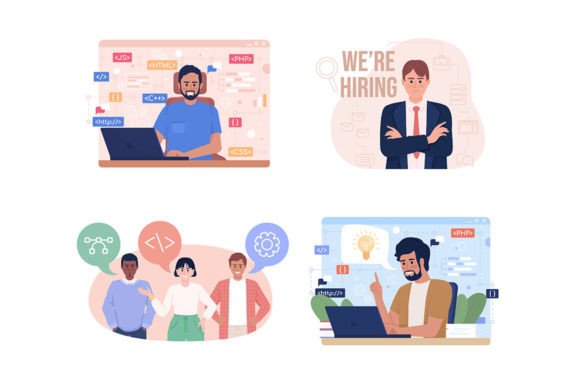
As someone who spends more time staring at stitch maps than most people care to admit, I approach new design assets with a healthy mix of excitement and skepticism. When I first pulled up the Recruiting Software Engineers pack, my initial reaction wasn't about the code or the tech theme; it was about the potential for thread. This isn't just a digital graphic; it is a candidate for a real-world embroidery project. The source material describes a 2D vector isolated illustration set featuring flat characters on a cartoon background, utilizing the bold Bebas Neue font. While the description highlights its use for mobile and web presentations, my mind immediately went to the hoop. Could this colorful, editable scene translate effectively into a machine embroidery design that holds up on a tote bag or a boutique sweatshirt?
First Impressions: Shape, Mood, and Stitch Potential
The visual personality of Recruiting Software Engineers is undeniably modern. The flat character style suggests clean lines and distinct color blocks, which is music to an embroiderer's ears. In the world of Illustrations and Graphics, flat design often translates well to stitching because it minimizes the need for complex shading that can muddy thread colors. The mood is professional yet approachable, perfect for a craft business looking to appeal to the tech sector or a maker creating gifts for developer friends.
However, the devil is in the details. The inclusion of the Bebas Neue font is a double-edged sword. It is a fantastic, condensed sans-serif typeface that looks sharp on a screen, but in embroidery, thin vertical strokes can be fragile. If you are planning to digitize this yourself or have it converted, you need to pay close attention to the letter thickness. For a finished product that needs to survive washing, those letters might need to be beefed up slightly or handled with a tight satin stitch rather than a delicate running stitch. The "colorful editable scene" aspect implies versatility, but remember that every color change in embroidery adds time and potential for thread nests on the back of your handmade product.
Real-World Application: From Screen to Sweatshirt
Let's talk about a concrete scenario. Imagine you run a small shop selling custom gear for tech startups. You want to create a welcome kit for new hires. A sweatshirt embroidery project using the Recruiting Software Engineers motif would be a standout item. The cartoon background elements could be simplified into a fill stitch pattern to create texture without overwhelming the fabric. Alternatively, consider a heavy canvas tote bag design. The sturdy fabric of a tote can support the density required to make those flat characters pop, turning a simple grocery bag into a statement piece for a conference or office outing.
I also see strong potential for embroidered patch creation. Because the characters are isolated in the vector set, you could easily separate them to create a series of small badges. These could be applied to caps, backpacks, or laptop cases. For an Etsy seller, offering a set of "Developer Life" patches based on this artwork could be a lucrative niche. The key here is adaptation. The original digital embroidery file concepts might be too wide for a standard cap frame, so cropping the scene to focus on a single character or the bold typography might be necessary for curved surfaces.
Beyond apparel, think about home decor. A pillow cover in a home office featuring this design adds a touch of personality. Since the source mentions it is an editable scene pack, you have the freedom to rearrange elements to fit a square hoop perfectly. Just ensure that when you scale it down for smaller items like baby clothes or kitchen towels, the integrity of the design remains. Tiny details that look crisp on a monitor can disappear under thread if the stitch density isn't managed correctly.
Navigating Technical Challenges and Fabric Choices
While the aesthetic is strong, practical application requires caution. Not every fabric is a good host for Recruiting Software Engineers. If you are working with stretchy jersey knits for t-shirts, the stability of the design is paramount. The flat shapes might distort if the fabric stretches during wear. In these cases, using a high-quality cut-away stabilizer is non-negotiable. For textured fabrics like Terry cloth or heavy wool blends, the fine lines of the cartoon background might get lost. This design shines best on smooth, tightly woven materials like twill, denim, or high-count cotton.
Dark fabrics present another consideration. The description notes a "colorful" palette. If you are stitching onto a black hoodie, you must ensure your thread colors have enough saturation and brightness to stand out. You may need to adjust the digitizing to include an underlay that prevents the dark fabric from peeking through the lighter colors of the characters. Furthermore, be wary of dense stitch areas. If the vector art has large blocks of solid color, converting them directly to fill stitch can result in a stiff, cardboard-like feel. Breaking these areas up with varied stitch angles or reducing density can improve the drape and comfort of the custom apparel.
Designer Notes for Commercial Success
Before you commit to producing a batch of items for a craft fair or fulfilling a large order, you must test. Do not skip the scrap fabric stage. Stitch the design on the exact material you intend to sell. Check how the Bebas Neue font holds up after three wash cycles. Does it fray? Do the corners pull? These are the questions that determine customer trust and brand consistency.
- Check Licensing: The product description mentions it is an illustration set. Before selling finished items or digital products based on Recruiting Software Engineers, confirm the license terms. Can you sell physical goods? Are there restrictions on digital redistribution?
- Hoop Size Verification: Ensure the design fits your available hoop sizes. If the scene is wide, you may need a large hoop or a split-stitching technique.
- Contrast Testing: Create black and white mockups to see if the design relies too heavily on color for definition. If it loses its shape in grayscale, it might need outline adjustments.
- Detail Inspection: Zoom in on the smallest elements. If a character's eye or a specific icon detail is smaller than 3mm, consider simplifying it for embroidery to avoid thread breaks.
Ultimately, Recruiting Software Engineers offers a vibrant, contemporary look that bridges the gap between digital culture and tactile craftsmanship. For the creative entrepreneur, it represents an opportunity to tap into a specific market with style. However, its success as a commercial embroidery asset depends entirely on your execution. By respecting the limitations of thread and fabric, and by adapting the vector strengths to the realities of the needle, you can turn this graphic set into a highly desirable personalized gift or a staple small shop product. The design has the visual appeal; it is up to you to ensure the stitching matches the quality of the concept.